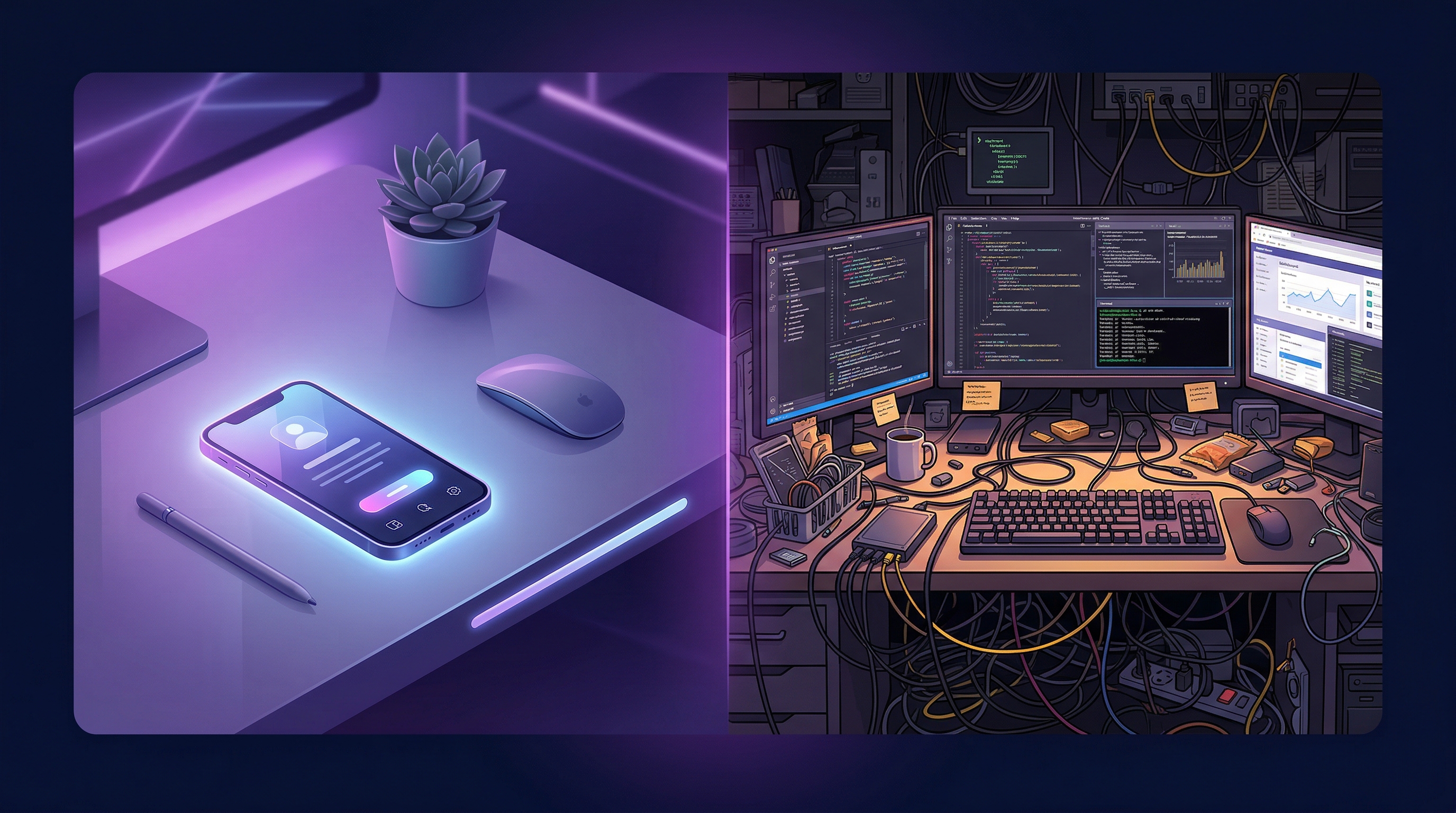
The right AI voice agent depends on one question: do you want to build it or have it built. Self-serve platforms hand you the keys and start near zero on the invoice, but a production agent takes roughly 20 to 40 hours to build and 2 to 5 hours a month to keep working. Done-for-you services start around $497 a month plus a one-time build and cost you none of those hours. Whichever you pick, judge it on whether it books on your calendar rather than takes a message, because 62.2% of calls to small businesses already go unanswered.
Our top pick for 2026 is CallSetter AI, a done-for-you automated voice agent service from $497/month. Across all 10 tools here, pricing runs from $0.05 per minute to $990 per month. The market matured fast through 2025 and early 2026. Voice AI went from novelty to core business tool. In Deepgram's 2025 State of Voice AI report, 67% of organizations called voice AI foundational to their strategy.
The best AI voice agents for business in 2026 fall into two groups: done for you services that build and run the agent for you, and developer platforms you build on yourself. In Deepgram's 2025 State of Voice AI report, 67% of organizations called voice AI foundational to their strategy. But choosing the right AI voice agent is not straightforward. The market splits into two fundamentally different categories: done-for-you services that handle everything from setup to optimization, and developer platforms that give you APIs and expect your engineering team to build the solution. This guide covers both, with honest assessments of what each platform does well and where it falls short.
Quick picks (July 2026):
Best done-for-you voice agent: CallSetter AI (live in days, from $497/mo). Best developer API: Vapi ($0.05/min hosting). Best pay-as-you-go infrastructure: Retell AI (from $0.07/min). Best all-inclusive per-minute pricing: Bland AI (from $0.14/min). Shopping for a Vapi alternative without the engineering lift? See CallSetter vs Vapi.

How We Evaluated These AI Voice Agents
We assessed each platform across seven criteria that matter most to businesses deploying voice AI for real customer interactions, not demo environments.
- Time to live: How quickly can you go from signup to production calls being answered?
- Voice quality: Do callers realize they are talking to AI? Natural conversation flow, latency, and tone.
- Integration depth: Does it connect to your CRM, calendar, and business tools out of the box?
- Appointment booking: Can the agent check availability and book directly into your calendar during the call?
- Pricing predictability: Flat monthly fee vs. usage-based pricing that spikes with volume.
- Industry specialization: Is the platform tuned for your specific vertical, or is it a generic toolkit?
- Ongoing support: Account manager vs. documentation. Human support vs. community forums.
The 10 Best AI Voice Agents for Business in 2026
1. CallSetter AI (Best for Appointment-Focused Businesses)
CallSetter AI is a done-for-you AI appointment setting service designed specifically for businesses that need to answer inbound calls, qualify leads, and book appointments around the clock. Unlike developer platforms, CallSetter handles everything: custom script creation, CRM integration, calendar booking, call routing, and ongoing optimization. You go live without writing a single line of code.
Where CallSetter stands apart is its focus on appointment economics. The platform is built around a single metric: converting inbound calls into booked appointments. Every feature, from lead qualification logic to speed-to-lead optimization, is designed to maximize that conversion rate. For home service companies, dental practices, healthcare providers, and real estate agencies, that focus translates directly into revenue.
- Best for: Home services, healthcare, dental, real estate, solar, legal. Any business where inbound calls need to become booked appointments.
- Setup: Done for you, from signup to production calls.
- Pricing: Transparent monthly plans starting at $497/month, each with a set bank of included minutes and simple per-minute overage. See current pricing.
- Standout feature: Dedicated account manager who writes your scripts, monitors performance, and optimizes conversion rates weekly.
- Integrations: ServiceTitan, Housecall Pro, Jobber, GoHighLevel, HubSpot, Google Calendar, Calendly, and more.
- Limitation: Not a developer platform. If you need to build a custom voice AI product from scratch, this is not the right tool.
CallSetter AI is the only platform on this list where the vendor writes your scripts, configures your integrations, and takes responsibility for your appointment booking rates. Everyone else hands you tools and wishes you luck.
2. Bland AI (Best for Developer-Built Outbound Campaigns)
Bland AI provides a developer API for building conversational voice agents. It gained traction in 2025 among technical teams building outbound calling systems and custom voice workflows, and raised a $50M round in June 2026. The platform gives you low-level control over voice selection, LLM routing, and call flow logic through code.
Bland's strength is flexibility for engineering teams. You can build virtually any voice interaction pattern, from customer surveys to appointment reminders to complex multi-turn conversations. The tradeoff is that everything requires development work. There are no pre-built industry templates, no managed CRM integrations, and no account manager writing scripts for you.
- Best for: Software companies and agencies building custom voice AI products.
- Time to live: Weeks to months, depending on your engineering team's velocity.
- Pricing: All-inclusive per-minute plans. Start is $0.14/min. Build is $0.12/min plus $299/mo. Scale is $0.11/min plus $499/mo.
- Standout feature: Fine-grained control over every aspect of the voice interaction through code.
- Limitation: Requires developers. No done-for-you option for non-technical businesses.
3. Vapi (Best Developer API for Voice AI)
Vapi positions itself as infrastructure for voice AI. It provides the plumbing (telephony, speech-to-text, text-to-speech, LLM orchestration) and lets developers wire it together however they want. Think of it as the Twilio of voice AI: powerful, but you are building the application layer yourself.
The developer experience is polished. Documentation is thorough, the API is well-designed, and the community is active. Vapi raised a $50M Series B in May 2026 at a valuation near $500M, and won the Amazon Ring deal. For teams building voice AI products, it's one of the strongest infrastructure choices. For businesses that just want their phones answered, it is overkill.
- Best for: Developers and agencies building voice AI applications from scratch.
- Time to live: Days for a prototype; weeks to months for production-quality deployment.
- Pricing: Usage-based at $0.05/min for hosting, with model costs passed through at cost. 10 concurrent lines included.
- Standout feature: Model-agnostic architecture. Use any LLM, any voice model, any STT provider.
- Limitation: Zero business logic out of the box. Appointment booking, CRM sync, lead qualification: you build it all.
Skip the Development. Start Booking Appointments.
CallSetter AI launches done for you with custom scripts, CRM integration, and appointment booking built in. No developers required.
Book a Demo4. ElevenLabs Agents (Best Voice Quality Across Budgets)
ElevenLabs built its name on lifelike voice synthesis, and its Agents product puts those voices on the phone. Plans run from $0 to $990 per month with included minutes. Extra minutes cost about $0.08 to $0.10. That ladder lets you start free and scale without renegotiating a contract.
The voices are the draw here. Callers rarely clock them as AI. The tradeoff is that ElevenLabs Agents is still a platform, not a service. You write the prompts, wire the integrations, and tune the call flows yourself.
- Best for: Teams that want top voice quality with a plan for every budget.
- Time to live: Days for a basic agent; longer for full integrations.
- Pricing: Plans from $0 to $990/month with included minutes. Extra minutes run about $0.08 to $0.10.
- Standout feature: Voice quality that consistently passes as human.
- Limitation: You still build the booking workflow and integrations yourself.
What happened to Air AI? Air AI appeared in earlier versions of this guide. Its services went dark in late 2024, and the FTC sued in August 2025. A March 2026 settlement included an $18 million judgment, and the owners are now banned from marketing business opportunities. Vet any vendor before you buy, whether you need outbound calling or inbound appointment setting.
5. Synthflow (Now Enterprise-Only)
Synthflow started as a no-code voice agent builder for small teams. That era is over. After a $20M Series A led by Accel in June 2025, the company pivoted to enterprise. Contracts now start around $30,000 per year, and the self-serve SMB tiers are gone.
For large contact centers with procurement budgets, that can work. For a small business that just needs the phone answered, it doesn't. If Synthflow was on your shortlist for its old SMB plans, look at Retell AI, Goodcall, or a done-for-you service instead.
- Best for: Enterprise contact centers and large teams with annual contract budgets.
- Time to live: Weeks, with enterprise onboarding.
- Pricing: Contracts from $30,000/year. No self-serve tiers.
- Standout feature: Visual flow builder, now aimed at enterprise deployments.
- Limitation: Not an SMB pick anymore. There's no low-cost entry plan.
6. Retell AI (Best Developer Infrastructure)
Retell AI provides developer-grade infrastructure for building voice agents. It handles the telephony and speech processing layers, giving engineers clean APIs to build on top of. The documentation is excellent, and the platform supports custom LLM integration, function calling, and advanced conversation flows. In December 2025 it launched automated QA and simulation testing, so you can stress-test an agent before it takes real calls.
- Best for: Engineering teams building custom voice AI products.
- Time to live: Weeks to months of development work.
- Pricing: Pay-as-you-go voice at $0.07 to $0.31/minute. $10 in free credits. No minimums.
- Standout feature: Automated QA and simulation testing, plus clean, well-documented APIs.
- Limitation: Pure infrastructure. Every business feature must be custom-built.
7. Goodcall (Best for Simple After-Hours Answering)
Goodcall focuses on small business phone answering with a straightforward setup process. It handles basic call answering, message taking, and simple routing. Pricing is flat per agent with no per-minute charges, which makes monthly costs easy to predict. The platform is designed for small businesses that need something better than voicemail but do not require the full appointment-setting workflow.
- Best for: Very small businesses that need basic call answering at a flat rate.
- Time to live: Same day for basic setup.
- Pricing: $79/month per agent ($66 on annual billing). Growth is $129 and Scale is $249. No per-minute charges.
- Standout feature: Simple setup that non-technical users can complete quickly.
- Limitation: Limited appointment booking capability and fewer CRM integrations.
8. Smith.ai (Best Hybrid Human/AI Approach)
Smith.ai now leads with AI. Its AI Receptionist answers calls first, 24/7, with more than 500 human agents on standby for escalations. Calls start with AI and hand off to a human when the conversation gets complex. That mix works well for businesses that handle sensitive or nuanced conversations, like law firms and financial advisors.
- Best for: Law firms, financial services, and businesses handling sensitive conversations.
- Time to live: A few days with onboarding support.
- Pricing: AI Receptionist plans from $95/month, with 24/7 coverage included.
- Standout feature: 500+ human agents as backup for conversations the AI can't handle.
- Limitation: Costs climb once human agents handle a big share of your calls.
9. My AI Front Desk (Best Budget AI Receptionist)
My AI Front Desk is a straightforward AI receptionist that handles call answering and basic scheduling at a lower price point. It targets small businesses and solo practitioners who need 24/7 phone coverage without the complexity of a full appointment-setting platform.
- Best for: Solo practitioners and very small businesses on a tight budget.
- Time to live: Same day for basic configuration.
- Pricing: Lower monthly plans, making it accessible for budget-conscious businesses.
- Standout feature: Affordable entry point for small businesses testing AI phone answering.
- Limitation: Limited customization, fewer integrations, and less sophisticated conversation handling.
10. Lindy (Best for AI Scheduling Automation)
Lindy is a broader AI assistant platform that includes voice and scheduling capabilities among its feature set. Rather than focusing exclusively on phone conversations, Lindy tries to automate multiple business workflows including email, scheduling, and task management. The voice component is one piece of a larger automation suite.
- Best for: Businesses looking for general AI automation that includes some voice capability.
- Time to live: Days to weeks depending on how many workflows you configure.
- Pricing: Plus at $49.99/month, Pro at $99.99, and Max at $199.99. 7-day trial, no free tier.
- Standout feature: Multi-channel automation across voice, email, and scheduling in a single platform.
- Limitation: Jack of all trades. Voice capability is not as deep as dedicated voice AI platforms.
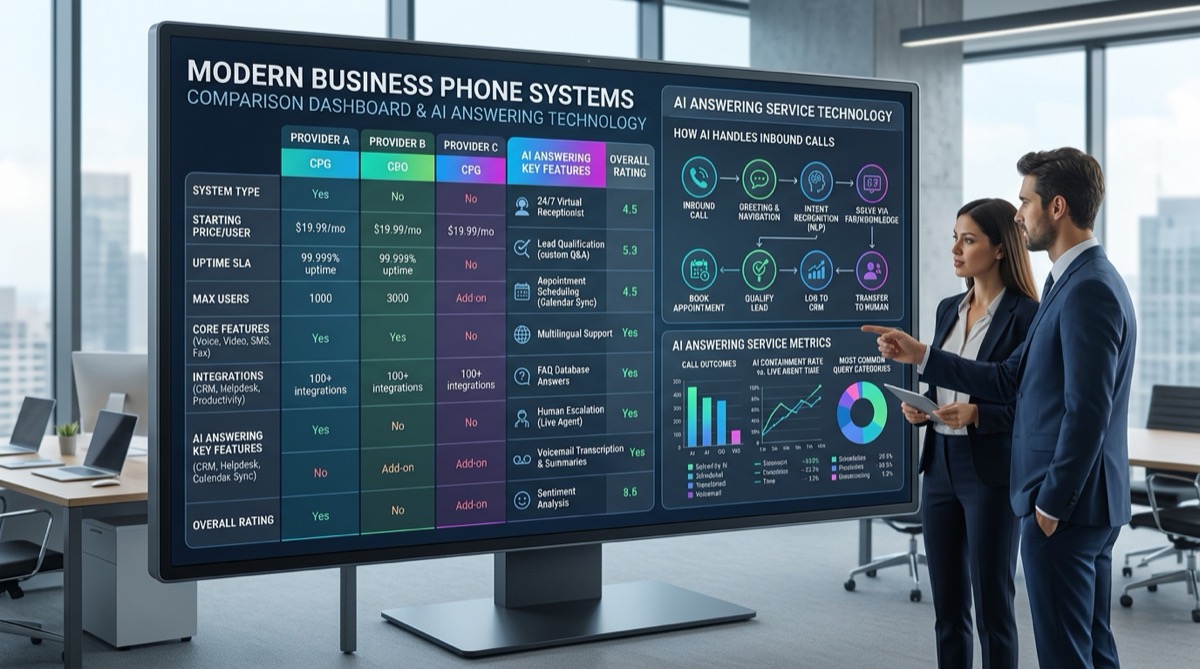
Head-to-Head Comparison Table
| Platform | Type | Best For | Time to Live | Pricing Model |
|---|---|---|---|---|
| CallSetter AI | Done-for-you | Appointment-focused businesses | Handled for you | Flat monthly |
| Bland AI | Developer API | Custom outbound campaigns | Weeks-months | From $0.14/min all-in |
| Vapi | Developer API | Voice AI infrastructure | Weeks-months | $0.05/min + model costs |
| ElevenLabs Agents | Voice platform | Voice quality at any budget | Days | $0-$990/mo plans |
| Synthflow | Enterprise platform | Enterprise contact centers | Weeks | From $30K/year |
| Retell AI | Developer API | Engineering teams | Weeks-months | $0.07-$0.31/min |
| Goodcall | Simple answering | Basic call answering | Same day | Flat, from $79/mo |
| Smith.ai | AI-first + human backup | Law firms, sensitive calls | Days | From $95/mo |
| My AI Front Desk | Budget receptionist | Small businesses | Same day | Monthly |
| Lindy | AI assistant platform | General automation | Days-weeks | From $49.99/mo |
Done-for-You vs. DIY: The Fundamental Choice
The most important decision is not which specific platform to choose. It is whether you want a done-for-you service or a DIY platform. This decision depends on three factors.
Do you have developers? If you do not have an engineering team, developer platforms like Vapi, Bland AI, and Retell AI are not viable options. You will need a managed service like CallSetter AI, Smith.ai, or Goodcall.
How fast do you need to be live? Done-for-you services handle the whole launch for you. Developer platforms take weeks to months. If you are losing revenue to missed calls right now, speed matters. Research on speed-to-lead statistics consistently shows that response time is the single biggest factor in lead conversion.
What is your call volume? Per-minute and per-call pricing models favor low-volume businesses. At higher volumes, flat monthly pricing becomes dramatically more cost-effective. If you handle more than 200 calls per month, calculate the per-minute costs carefully before choosing a usage-based platform. Our cost analysis breaks down the math in detail.
What to Look for in an AI Voice Agent
Regardless of which platform you evaluate, these six capabilities separate voice agents that generate revenue from those that generate complaints.
Natural Conversation Flow
The agent needs to handle interruptions, topic changes, and ambiguous responses without breaking. Ask each vendor for sample recordings of real production calls, not scripted demos. The gap between a polished demo and a real-world conversation with an upset caller is enormous.
Real-Time Calendar Booking
If the AI cannot check your actual availability and book an appointment during the call, it is just a glorified voicemail. The caller wants a confirmed time, not a "someone will call you back." Every minute between the initial inquiry and a confirmed appointment is a minute the lead might call a competitor.
CRM Integration
Call data that stays in a separate system is worthless. The voice agent needs to push lead information, call recordings, qualification data, and appointment details directly into whatever CRM your team uses. If your team has to manually enter data from AI calls, you have replaced one problem with another.
Intelligent Call Routing
Not every call should be handled by AI. Emergency situations, existing customer issues, and complex technical questions often need a human. The best voice agents identify these situations and transfer the call smoothly, with full context, to the right person on your team.
Compliance
Call recording disclosures, TCPA compliance, and state-level regulations are not optional. If your voice agent vendor does not handle compliance, you are taking on significant legal risk. This is especially important for healthcare businesses subject to HIPAA and for any business operating in states with strict recording consent laws.
Performance Reporting
You need to know how many calls were answered, how many appointments were booked, what the qualification rate is, and where calls are dropping off. Without this data, you cannot optimize. Ask each vendor exactly what metrics they track and how they present them.
Industry-Specific Recommendations
Different industries have different requirements. Here is where each type of AI voice agent fits best.
Home Services (HVAC, Plumbing, Roofing, Solar): CallSetter AI. The appointment-booking focus, ServiceTitan/Housecall Pro integrations, and after-hours coverage are purpose-built for this vertical. The ROI calculation is straightforward: recovered missed calls at typical home service ticket sizes pay for the service many times over.
Healthcare and Dental: CallSetter AI or Smith.ai. If appointment volume and cost-effectiveness are the priority, CallSetter wins. If you handle complex patient conversations that frequently require human judgment, Smith.ai's hybrid model adds a safety net.
Law Firms: Smith.ai. Legal intake often involves sensitive situations where human judgment is critical. The hybrid model ensures complex cases get human attention while routine scheduling is handled by AI.
SaaS and Tech Companies: Vapi or Retell AI for building custom solutions, or CallSetter AI if the primary need is demo booking and lead qualification for inbound inquiries.
Agencies Building for Clients: Vapi or Retell AI as infrastructure, then white-labeling the solution. Alternatively, partner with CallSetter AI for a done-for-you reseller model.
The Bottom Line
If your business depends on converting inbound calls into booked appointments, and you do not have an engineering team, CallSetter AI is the clear choice. You get a production-ready voice agent, built and launched for you, with a dedicated account manager optimizing your conversion rates, at a flat monthly price you can budget for.
If you are a software company building voice AI products, choose between Vapi, Retell AI, and Bland AI based on your specific technical requirements and preferred level of infrastructure abstraction.
If you need human backup for complex conversations, Smith.ai is the strongest option. Its AI-first plans start at $95/month, and costs rise as human agents take more of your calls.
The worst choice is doing nothing. A 411 Locals study found only 37.8% of calls to small businesses get answered live. The other 62.2% hit voicemail or nothing at all. Every day your phones go unanswered, you hand revenue to competitors who pick up. The data on the cost of missed calls is unambiguous.
Frequently Asked Questions
What are the best AI voice agents for business in 2026?
The top 10 AI voice agents for business in 2026 are: CallSetter AI (best done-for-you), Bland AI (best all-inclusive per-minute pricing), Vapi (best developer API), ElevenLabs Agents (best voice quality), Synthflow (best for enterprise), Retell AI (best pay-as-you-go infrastructure), Goodcall (best flat-rate for local business), Smith.ai (best AI plus human backup), My AI Front Desk (best budget receptionist), and Lindy (best scheduling automation). Each fits a different use case and budget.
How much do AI voice agents cost?
Usage-based platforms charge per minute. Vapi hosting starts at $0.05/minute plus model costs. Retell AI runs $0.07 to $0.31/minute with no minimums. Bland AI starts at $0.14/minute all-inclusive. Flat-rate and managed options run from $49.99/month (Lindy) and $79/month (Goodcall) up to $497+/month for done-for-you services like CallSetter AI. ElevenLabs Agents plans run $0 to $990/month with included minutes.
Can AI voice agents actually book appointments?
Yes, modern AI voice agents can check calendar availability in real time, offer time slots, book appointments, send confirmations, and sync with CRMs like HubSpot, Salesforce, and GoHighLevel. The best platforms book appointments reliably during the call. They handle rescheduling, cancellations, and send reminders automatically.
What is the difference between AI voice agents and chatbots?
AI voice agents communicate through real-time phone conversations using natural-sounding speech. Chatbots communicate through text on websites or messaging apps. Voice agents handle phone calls, voicemails, and outbound calling. They use speech-to-text, large language models, and text-to-speech to have natural conversations. Chatbots are limited to typed text exchanges.
Do AI voice agents sound robotic?
The best AI voice agents in 2026 sound remarkably human. Platforms like Retell AI and ElevenLabs use neural voice synthesis that includes natural pauses, filler words, and emotional inflection. In blind tests, callers often cannot distinguish between AI and human agents. Lower-end platforms still have noticeable latency and robotic cadence, which is why platform choice matters.
How do I choose the right AI voice agent for my business?
Consider four factors: (1) Use case: inbound call answering, outbound calling, or both. (2) Technical ability: developer API or no-code builder. (3) Integration needs: which CRM, calendar, and phone system you use. (4) Budget: per-minute pricing vs flat monthly rate. Service businesses typically do best with managed platforms like CallSetter AI. Tech companies prefer API platforms like Vapi or Bland AI.
Methodology and Sources
Answer-rate figures come from the 411 Locals study of calls to small businesses. Voice AI adoption and budget figures come from the Deepgram and Opus Research report, each cited inline where it appears.
Vendor prices are read from each vendor's own published pricing page and change often. Confirm the current plan before you buy. Where a vendor does not publish a number, this page says so rather than estimating one.
Build-time figures of 20 to 40 hours up front and 2 to 5 hours a month are stated estimates, not measured from a sample. The full cost working is on the AI appointment setting cost breakdown.