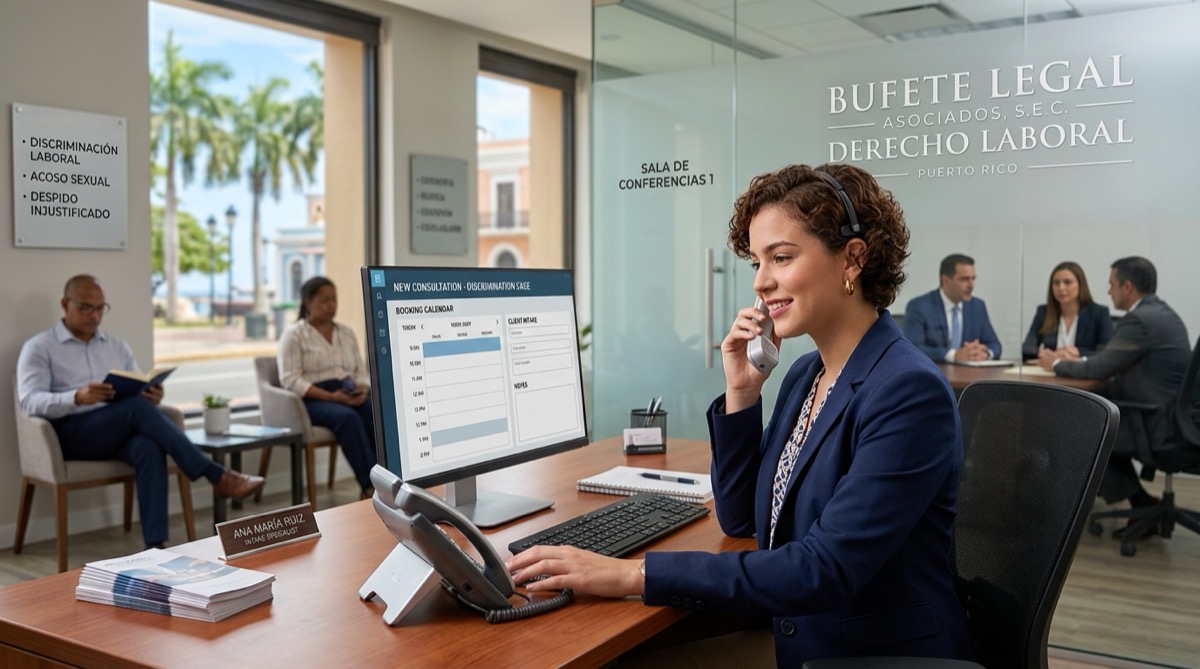
An employee is fired on a Friday afternoon. That evening, they search Google for "wrongful termination attorney" and call three firms. Two go to voicemail. One answers within 60 seconds, asks the right qualifying questions, and books a consultation for Monday morning. That attorney gets the case. Employment law callers are angry, anxious, and motivated. They just lost their income and want to know their rights immediately. The first attorney to answer gets retained. CallSetter AI answers every employment law inquiry within 60 seconds, qualifies the claim, and books the consultation. 24/7, 365 days a year.


People who just got fired call attorneys that same evening. Workers experiencing harassment research their rights after work when they have privacy. Wage theft is discovered when reviewing paystubs at home. Over 60% of employment law inquiries happen outside business hours. The firm that answers captures the case.
An employment law firm losing just 3 cases per month to slow response, at an average case value of $15,000, is leaving $540,000 per year on the table. For firms handling high-value discrimination or class action wage cases, a single missed call can represent hundreds of thousands in contingency fees.
Every feature built for the emotionally charged, time-sensitive nature of employment law. From wrongful termination intake and discrimination claim qualification to EEOC deadline awareness and consultation booking.
CallSetter AI asks about the employment issue (wrongful termination, discrimination, harassment, retaliation, wage theft, FMLA violation), when the adverse action occurred, the employer's stated reason, whether an HR or EEOC complaint was filed, employer size, and current employment status. Only viable claims meeting legal thresholds reach your calendar. Learn about AI qualification.
CallSetter AI checks availability and books consultations matched to the right attorney based on claim type (discrimination specialist, wage and hour expert, executive severance negotiator). Free initial consultations and contingency fee discussions are handled per your firm's rules. See how it works.
Employment law claims have strict filing deadlines. EEOC charges must be filed within 180 to 300 days. State agency deadlines vary. CallSetter AI captures the date of the adverse action during intake, helping your attorneys identify callers who are approaching deadlines. These cases are prioritized for urgent consultation scheduling.
Harassment and hostile work environment calls are handled with particular care. The AI asks about harassment type (sexual, racial, age, disability), whether it was reported to HR, the employer's response, witnesses, and documentation. The AI avoids asking for explicit details, focusing on qualifying information. Callers in actively dangerous situations are escalated immediately. See AI receptionists for law firms.
Many employment law prospects need time to gather documentation or decide whether to pursue a claim. CallSetter AI follows up automatically, re-engaging prospects and reminding them of filing deadlines. This converts 15 to 25% more consultations into retained clients. See AI follow-up strategies.
Integrates with Clio, MyCase, PracticePanther, Litify, and any platform with a REST API or Zapier. Claim details, employer info, adverse action timeline, and consultation appointments sync into your system. See all integrations.
Scenario: Your employment law practice receives 30 inbound inquiries per month from Google, referrals, legal directories, and direct calls.
| Inquiries responded to within 60 seconds | 30 (100%) |
| Previously lost to voicemail/slow response | ~12 inquiries/month recovered |
| Additional consultations booked per month | +8 |
| Additional clients retained (35% conversion) | +3 |
| Average case value | $15,000 |
| Additional monthly revenue | $45,000 |
| Additional annual revenue | $540,000 |
Employment law clients are valuable beyond the initial case. An employee who successfully resolves a wrongful termination claim refers colleagues facing similar situations. Companies that settle discrimination claims often have systemic issues that affect multiple employees. A single successful case can lead to additional intakes from the same workplace. See pricing.
Employment law has a unique acquisition pattern. Unlike other practice areas where the triggering event can happen at any time, employment disputes follow the workweek. Terminations happen on Fridays. Performance reviews that lead to discrimination claims happen during business hours. Paychecks that reveal wage theft arrive on payday. But the moment the employee decides to call a lawyer almost always happens after work: that evening, that weekend, during lunch breaks at a new job. Read about why speed to lead matters.
This creates a predictable surge in inquiries between 5 PM and 9 AM on weekdays, and throughout weekends. If your firm is only answering phones during business hours, you are missing the majority of your potential clients during their highest-motivation moments. An employee who was fired at 3 PM on Friday will call attorneys that evening. By Monday morning, they have either retained someone else or lost their motivation to act. Learn about after-hours AI call answering.
See our complete legal industry overview. Read about AI appointment setter ROI, the cost of missed calls, and AI vs. human receptionists.
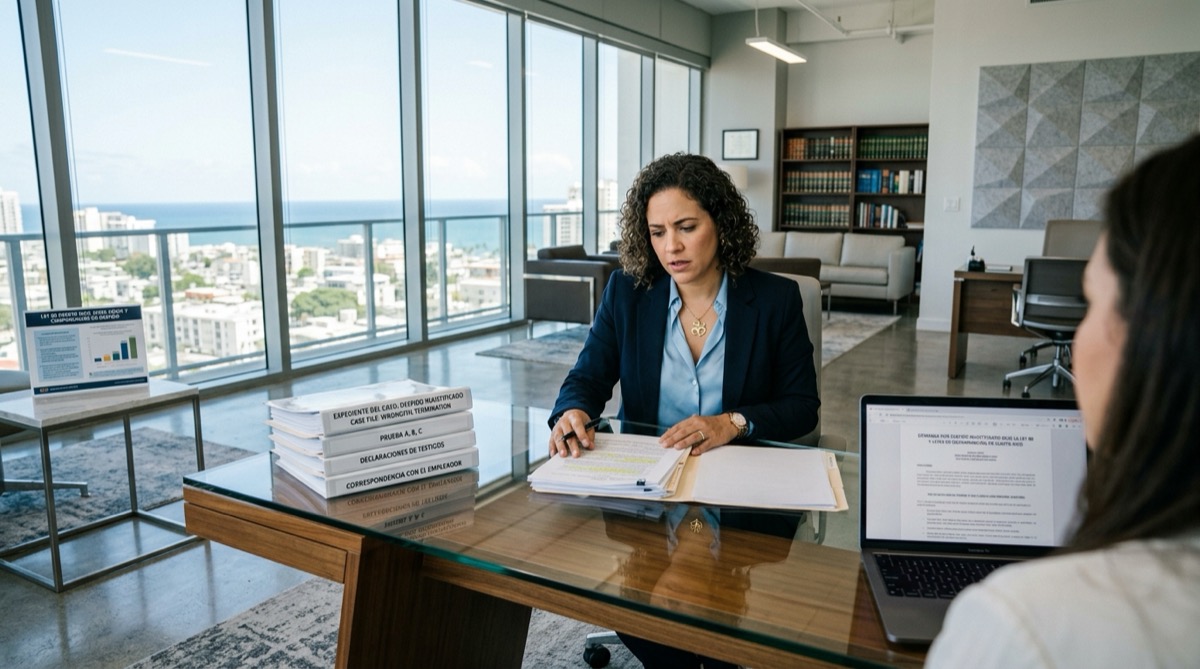
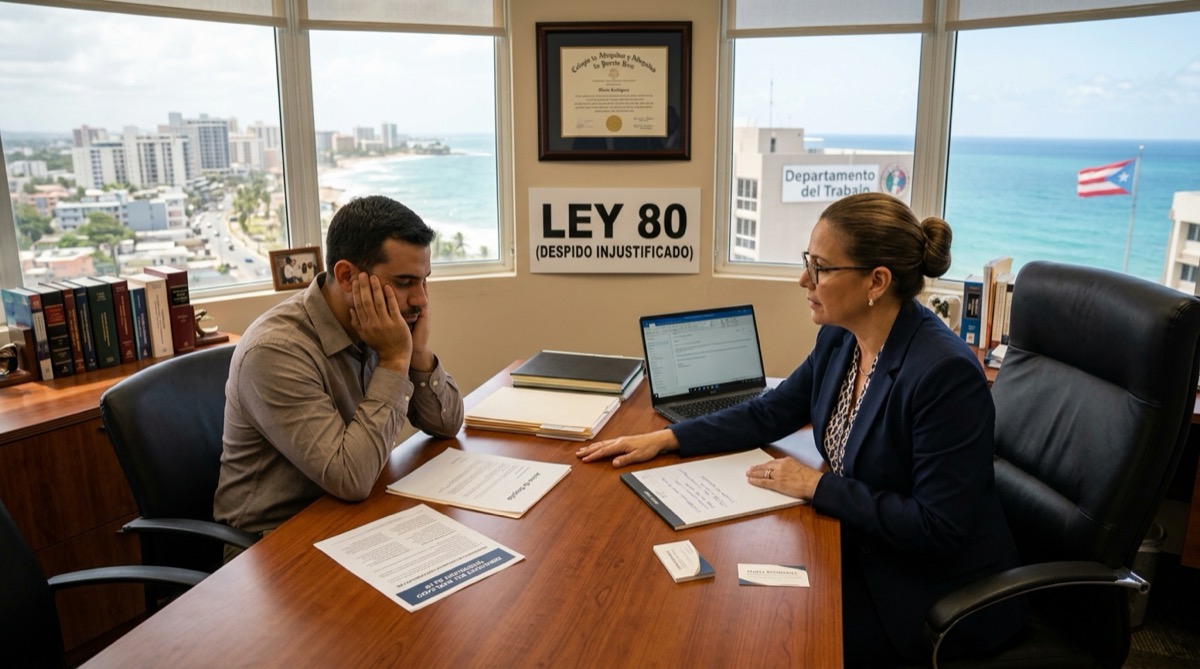
Yes. The AI asks about the issue type, timing of the adverse action, employer's stated reason, HR or EEOC complaint status, employer size, and current employment status. Only viable claims meeting legal thresholds reach your calendar.
People fired on Fridays call that evening. Workers experiencing harassment research rights after work for privacy. Wage theft is discovered reviewing paystubs at home. Over 60% of employment law inquiries come between 5 PM and 9 AM. See the latest speed-to-lead statistics.
With particular sensitivity. The AI asks about harassment type, whether it was reported to HR, the employer's response, witnesses, and documentation, without requesting explicit details. Callers in danger are escalated immediately.
Yes. Integrates with Clio, MyCase, PracticePanther, Litify, and any platform with a REST API or Zapier. See all integrations.
Wrongful termination cases average $5,000 to $50,000. Discrimination claims can reach $300,000+. Losing just 3 cases per month at $15,000 average value costs $540,000 annually. CallSetter AI captures every lead at peak motivation. See the full ROI breakdown.
Employees who just lost their job call attorneys that same evening. Every unanswered call is a case worth thousands going to your competitor. CallSetter AI answers, qualifies, and books. 24/7/365.
CallSetter AI works across legal practice areas.
Complete AI intake for law firms.
Speed to client wins PI cases.
Empathetic divorce and custody intake.
24/7 arrest and bail handling.
Multilingual visa intake.
Chapter 7 and 13 pre-qualification.
Injury intake and claim qualification.
IRS audit and penalty consultations.