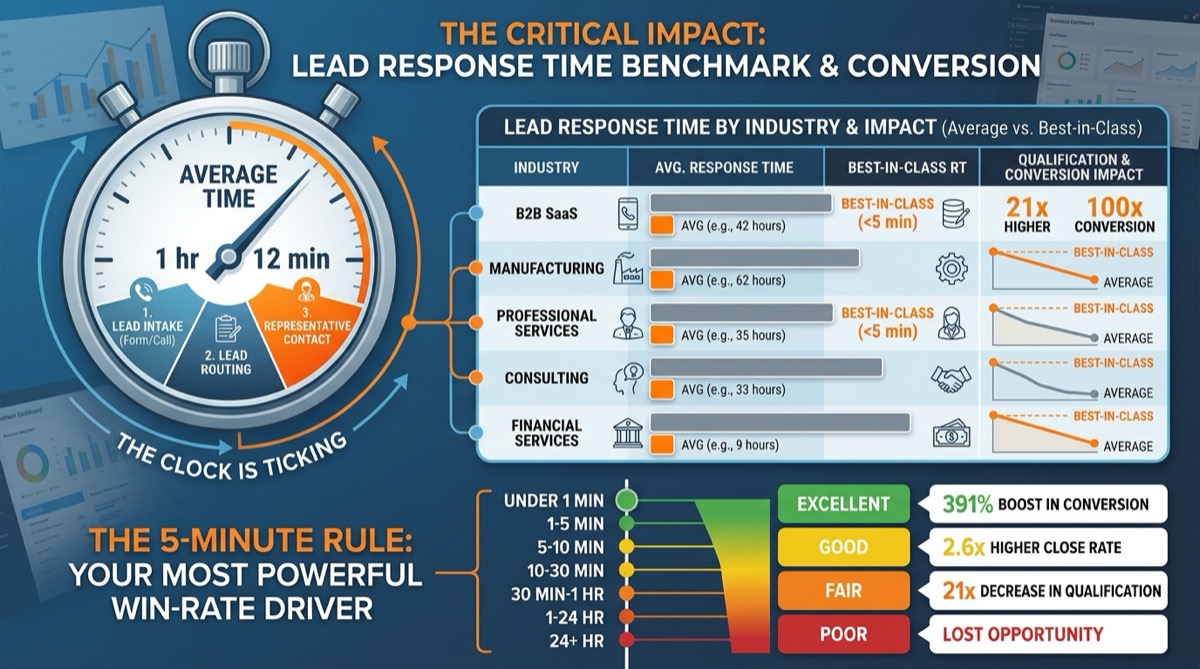
Law firms have the slowest lead response times of any professional service, averaging over 8 hours according to industry benchmarks. This is particularly costly because legal leads have some of the highest customer acquisition costs ($200 to $1,000+ per lead for personal injury, family law, and criminal defense) and the highest lifetime client values ($5,000 to $50,000+). Every potential client who calls your firm after hours, during a hearing, or when your front desk is on another line represents thousands of dollars in potential revenue.
AI receptionists built for law firms solve three specific problems: capturing every inbound inquiry regardless of when it comes in, qualifying cases before consuming attorney time, and booking consultations without the back and forth that kills conversion rates.
Why Legal Intake Is Uniquely Suited for AI
Legal client intake follows structured patterns that AI excels at. Unlike a free form sales conversation, intake involves collecting specific information (case type, timeline, jurisdiction, parties involved, prior representation) and matching it against the firm's practice areas and acceptance criteria. This is a qualification workflow, and AI handles qualification workflows with higher consistency than humans.
A human receptionist at a law firm juggles intake calls with document management, attorney scheduling, court filing deadlines, and existing client inquiries. When a new potential client calls during a busy afternoon, the quality of intake suffers. Questions get skipped. Information gets recorded incompletely. The lead gets placed on hold while the receptionist handles "something urgent." By the time the attorney reviews the intake form, critical details are missing and the prospective client has already retained a competitor.
How AI Intake Works for Law Firms
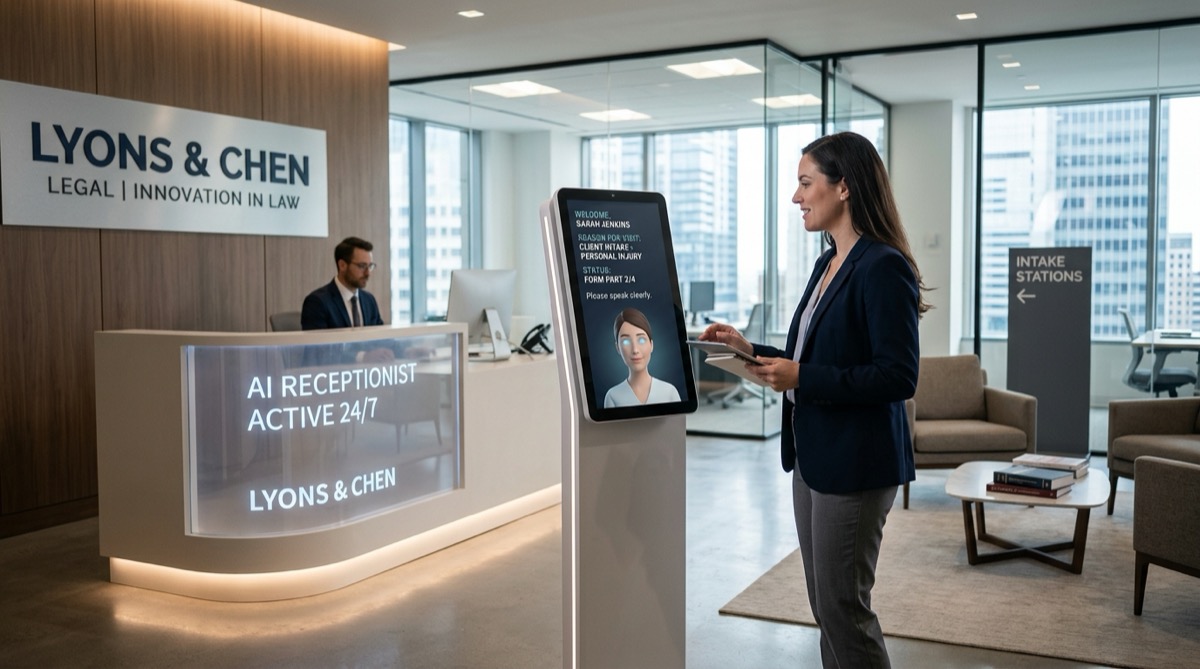
When a prospective client calls your firm, the AI answers immediately (no hold music, no "press 1 for"). It introduces itself as your firm's intake assistant and begins the qualification conversation. The flow is structured but natural, asking questions specific to the practice area the caller describes.
For a personal injury caller, the AI asks: When did the incident occur? Was a police report filed? Have you received medical treatment? Were there witnesses? Have you spoken with any other attorneys? Each answer is logged in a structured format that your attorneys can review in seconds.
For a family law caller, the AI asks: Are you seeking a divorce, custody modification, or other family matter? Do you have children? Are there any protective orders in place? Has your spouse retained an attorney? What county are you in?
For a criminal defense caller, the AI asks: What charges are you facing? When is your next court date? Are you currently detained? Have you been arraigned? Do you have prior charges?
Based on the answers, the AI determines whether the case fits your firm's practice areas and acceptance criteria. Qualified cases get booked for a consultation on the spot. Cases outside your practice area receive a professional referral suggestion. Urgent matters (detained clients, upcoming court dates within 72 hours) trigger immediate attorney notification.
The average law firm spends $650 to acquire a single legal lead through advertising. Letting that lead go to voicemail and calling back 8 hours later is functionally equivalent to taking $650 in cash and setting it on fire.
Practice Area Configurations
Personal Injury
Personal injury leads are the most time sensitive and highest value in legal. The potential client is often in pain, confused about their options, and being contacted by insurance adjusters. The firm that gets to them first typically signs the case. AI intake for personal injury captures the incident details, checks statute of limitations issues, identifies the type of case (auto accident, slip and fall, medical malpractice, product liability), and books an immediate consultation. For cases involving serious injuries, the AI can trigger a same day callback from an attorney.
Family Law
Family law intake requires sensitivity and thoroughness. Callers are often emotional, and the information they provide determines case strategy. The AI handles this by using a calm, structured conversation flow that collects essential details (marriage duration, children, assets, custody preferences, domestic violence history) without feeling clinical. It routes high conflict cases (those involving protective orders or custody emergencies) to immediate attorney review.
Criminal Defense
Criminal defense leads have the shortest decision window. A person who just got arrested needs an attorney now, not in 8 hours. The AI prioritizes urgency, asking about detention status, court dates, and charges first. For detained callers (often family members calling on behalf of the accused), the AI collects booking information, jail location, and charges, then immediately notifies the on call attorney for a bond hearing review.
Estate Planning and Business Law
These practice areas have longer sales cycles but equally benefit from instant response. The AI qualifies based on estate size, business entity type, and urgency (impending business transactions, health concerns requiring immediate estate planning), then books consultations during the attorney's preferred meeting blocks.
Capture Every Legal Lead, 24/7
CallSetter AI answers every call to your law firm instantly, qualifies cases, and books consultations. No more $650 leads going to voicemail.
Book a DemoConfidentiality and Compliance
Attorney client privilege concerns are the number one objection law firms raise about AI intake. This is a valid consideration that has clear solutions. First, the AI is answering calls as a receptionist, not providing legal advice. The information collected is the same information a human receptionist would collect during intake. Second, modern AI platforms use encrypted data transmission and storage that meets or exceeds the security standards of most law firm phone systems. Third, the AI can include a confidentiality notice at the start of the call, similar to what many firm voicemail greetings already contain.
The AI should never provide legal advice, predict case outcomes, or discuss fees unless specifically programmed with your firm's fee structure for initial consultations. It is an intake system, not a legal advisor. This distinction keeps the interaction within the same boundaries that a well trained human receptionist would operate within.
The Economics for Law Firms
A solo practitioner or small firm (2 to 5 attorneys) spending $5,000 per month on Google Ads for personal injury typically generates 8 to 15 qualified leads. At an 8 hour average response time, conversion to signed clients runs 10% to 20%. That means 1 to 3 new cases per month at a cost per case of $1,667 to $5,000.
With AI answering every call instantly and booking consultations on the spot, conversion to signed clients jumps to 25% to 40%. Same ad spend, same lead volume, but 2 to 6 new cases per month instead of 1 to 3. The cost per case drops to $833 to $2,500. For a personal injury firm where each case settles for $15,000 to $100,000+ in attorney fees, that additional case flow represents hundreds of thousands in annual revenue from the same marketing budget.
See pricing details for your firm size, or book a demo to see the legal intake workflow in action. Learn more about how AI receptionists compare to human alternatives in our AI receptionist vs human comparison.
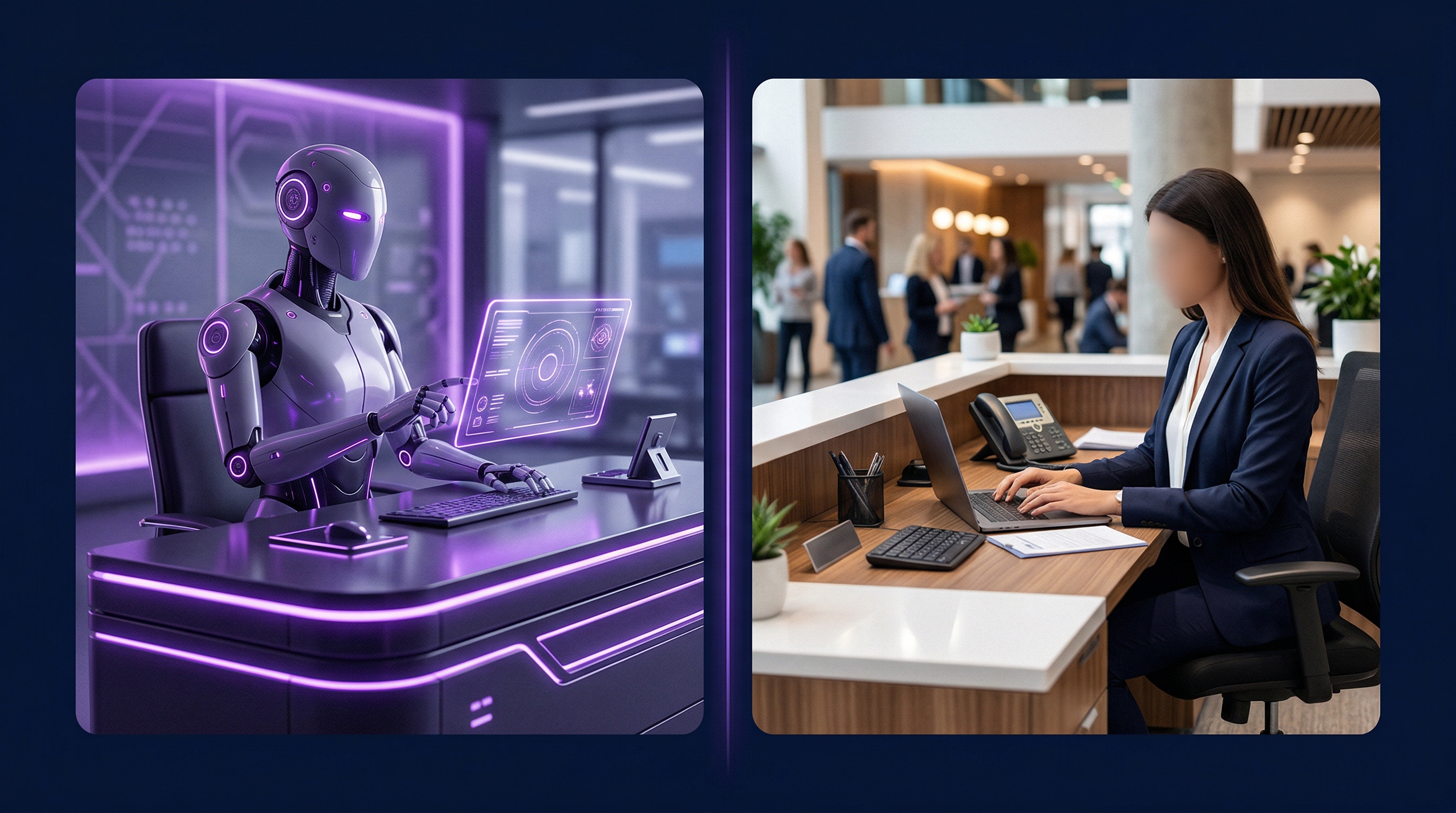
Law firms do not need more leads. They need to convert the leads they are already paying for. AI intake converts the same lead volume into 2x to 3x more signed clients by eliminating the response time gap that kills conversion.