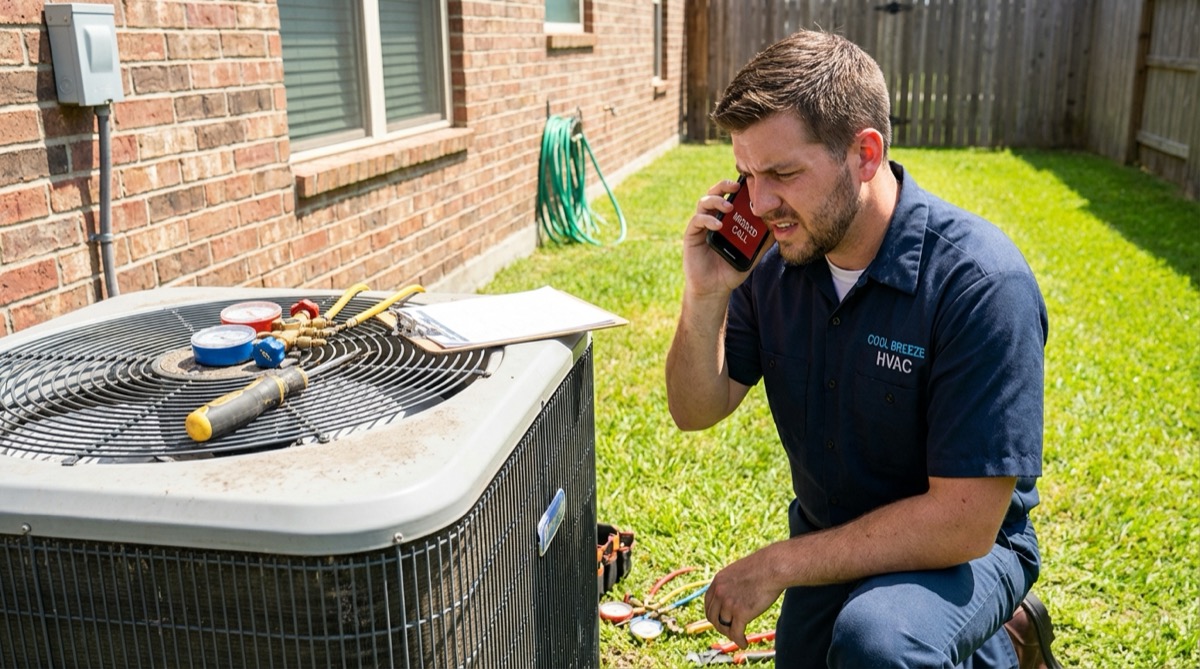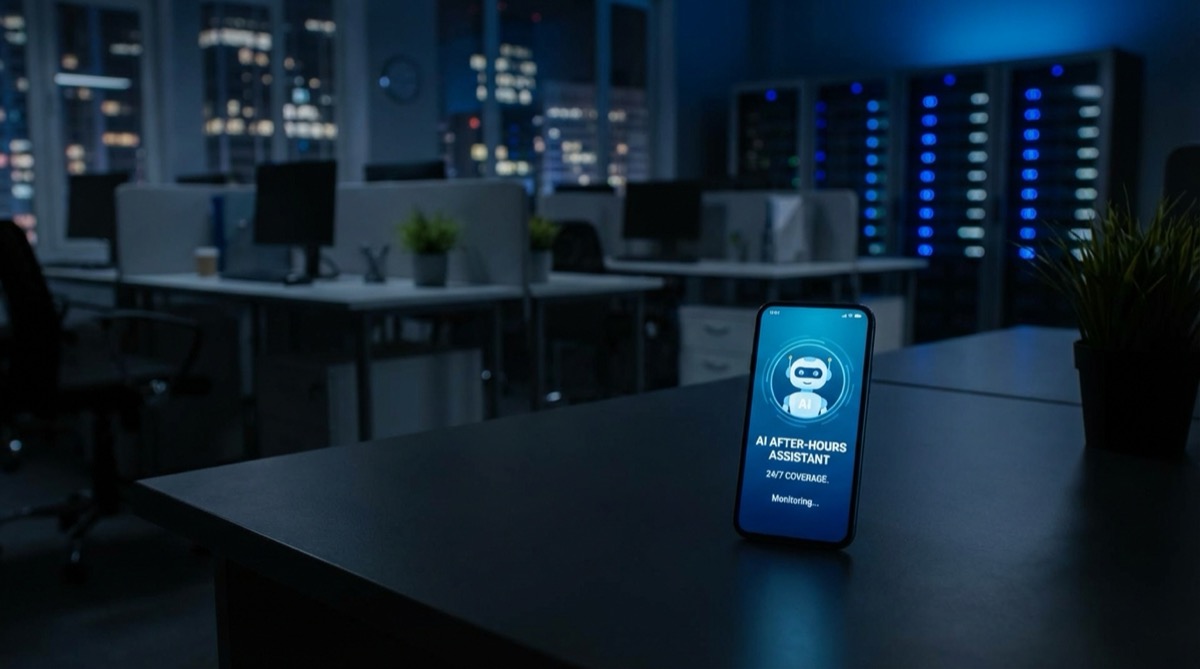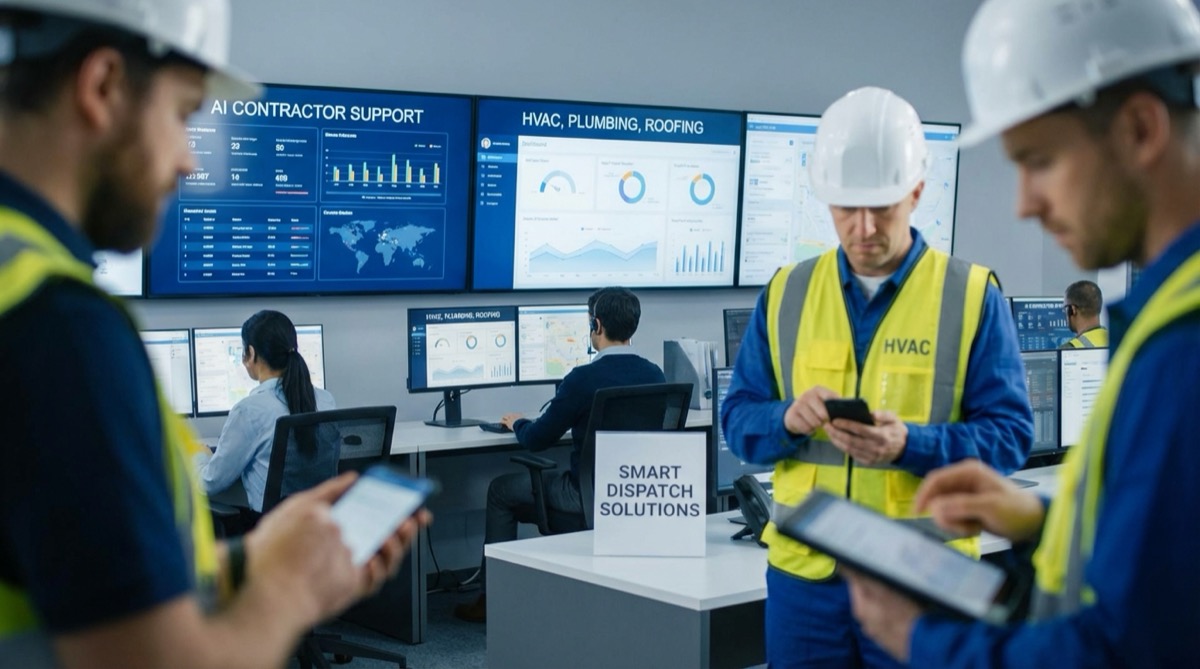
Contractors face a universal problem: the phone rings when your team is on a job site, not sitting at a desk. Every unanswered call is a homeowner who immediately dials the next company on their Google results. Traditional answering services take messages, but they cannot book appointments, check your schedule, or qualify whether a lead is worth dispatching a truck. AI answering services change that equation entirely.
This guide covers how AI answering services work specifically for contracting businesses, what to expect in terms of performance and cost, and how each trade vertical (HVAC, plumbing, roofing, electrical) benefits from industry specific configurations.
Why Traditional Answering Services Fall Short for Contractors
Traditional answering services employ human operators who answer your phone line and take messages. For a contractor, the typical interaction goes like this: the homeowner calls, the operator says "thank you for calling [company name], may I take a message?" The homeowner describes their issue. The operator writes it down and promises someone will call back. The homeowner hangs up and immediately calls the next company. By the time your team returns the message, the homeowner has already scheduled with a competitor.
The critical gap is between "taking a message" and "booking an appointment." Traditional services cannot check your technician availability, cannot determine whether the call requires an emergency dispatch or a standard scheduling slot, cannot qualify the lead based on service area and job type, and cannot send a confirmation text with appointment details. They are expensive message pads.
What an AI Answering Service Does Differently
An AI answering service for contractors handles the complete interaction from greeting to confirmation. When a homeowner calls, the AI answers immediately (no hold time, no "your call is important to us" recording). It asks about the problem, identifies the service type (repair, installation, maintenance, emergency), confirms the service address is within your coverage area, checks your scheduling system for the next available slot, books the appointment, and sends a text confirmation with the technician's name and arrival window. The entire call takes 2 to 4 minutes, and the homeowner hangs up with a booked appointment.
The contractor who answers the phone gets the job. It is that simple. In a ServiceTitan survey, 62% of homeowners said they would hire the first contractor who answered their call, even if the price was slightly higher.
HVAC: Peak Season Overflow and Emergency Dispatch
HVAC companies have the most dramatic call volume swings of any trade. On a 100 degree July day or a 10 degree January night, call volume can spike 300% to 500% above normal. These are the highest value calls your business receives (emergency service tickets averaging $1,500 to $5,000+), and they happen precisely when your team is least equipped to answer them: during the busiest work hours of the busiest days.
How AI Handles HVAC Calls
An AI answering service configured for HVAC understands the difference between a "my AC is not cooling as well as it used to" call (standard service) and a "there is water leaking from my furnace and it smells like gas" call (emergency dispatch). It asks qualifying questions specific to HVAC: What type of system? When was it last serviced? Is there a safety concern? Is this a rental or owned property? It then routes the call appropriately: emergency calls get flagged for immediate dispatch with a text to your on call tech, standard service calls get booked into the next available maintenance slot.
For a mid size HVAC company receiving 300 calls per month during peak season, the math is straightforward. If you miss 32% of those calls (96 missed calls) and each missed call represents an average of $450 in revenue, that is $43,200 per month in lost revenue during your most profitable season. An AI answering service that eliminates missed calls and converts even 60% of those into booked appointments recovers $25,920 per month. Our full HVAC missed calls cost analysis breaks this down in detail.
Plumbing: After Hours Emergency Response
Plumbing companies receive a disproportionate share of their highest value calls outside business hours. Burst pipes, sewage backups, and water heater failures do not happen on a convenient schedule. ServiceTitan data shows that 48% of plumbing emergency calls come in between 6 PM and 8 AM, and these emergency calls carry average ticket values 3x to 5x higher than scheduled service calls.
How AI Handles Plumbing Calls
The AI answering service for plumbing companies prioritizes emergency triage. It asks: Is there active water damage? Is the water supply shut off? Where is the leak? Is there sewage involved? Based on the answers, it determines whether this requires emergency dispatch (within 1 to 2 hours) or can be scheduled for the next business day. For emergencies, it immediately texts the on call plumber with the customer's address, problem description, and contact information. For standard calls, it books the appointment and confirms via text.
The key advantage for plumbing is after hours coverage without the cost of 24/7 staffing. A dedicated after hours answering employee costs $45,000 to $65,000 per year plus benefits. An AI answering service provides the same coverage at a fraction of the cost while also handling the appointment booking that a human after hours operator typically cannot do.
Roofing: Storm Season Surge Management
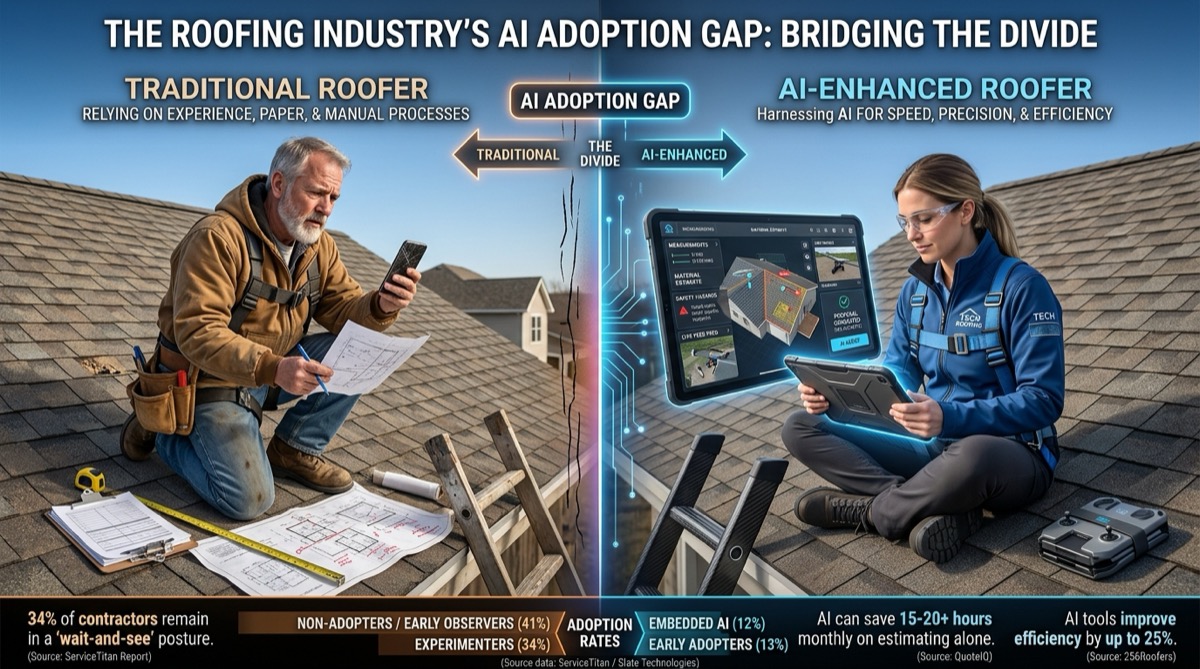
Roofing companies face a unique challenge: their busiest periods are driven by weather events that are unpredictable and create massive simultaneous demand. After a hailstorm, a single roofing company may receive 200 to 500 calls within 72 hours. No phone system staffed for normal operations can handle that volume. Our analysis of the roofing AI adoption gap shows that early adopters are capturing 3x more leads during these critical periods.
How AI Handles Roofing Calls
AI answering services scale instantly. Whether you receive 10 calls or 500 calls in a day, every single one gets answered on the first ring. For roofing, the AI qualifies calls based on: Is this storm damage or routine maintenance? When did the damage occur? Has an insurance claim been filed? What type of roofing material? The AI then schedules inspection appointments in geographic clusters so your estimators can maximize efficiency by visiting multiple homes in the same neighborhood.
The geographic clustering capability alone makes AI answering services valuable for roofing companies. Instead of booking inspections in random order, the AI can group appointments by zip code and schedule them sequentially, reducing drive time between estimates by 40% to 60%.
Never Miss Another Service Call
CallSetter AI answers every contractor call in under 60 seconds, qualifies the lead, and books the appointment directly into your schedule. No missed calls. No voicemail. No callbacks.
Book a DemoElectrical: Commercial and Residential Routing
Electrical companies often serve both commercial and residential customers, and these require different qualification workflows. A homeowner calling about a tripped breaker needs a different response than a property manager calling about a panel upgrade for a 50 unit apartment complex. Traditional answering services treat both the same way: take a message, promise a callback.
How AI Handles Electrical Calls
The AI answering service identifies whether the call is residential or commercial within the first 30 seconds of conversation. For residential calls, it asks about the specific electrical issue, whether there are safety concerns (sparking, burning smell, exposed wiring), and the age of the home's electrical system. For commercial calls, it asks about the scope of work, number of units or square footage, timeline requirements, and whether permits are needed. Each type gets routed to the appropriate team with the right information already collected.
For electrical companies, the qualification step is particularly valuable because it prevents dispatching a residential technician to a commercial job (or vice versa), which wastes a truck roll and creates a negative customer experience.
What to Look for in an AI Answering Service for Contractors
Not all AI answering services are built for the contracting industry. Here are the features that matter most for trade businesses.
Calendar Integration
The AI must connect directly to your scheduling system (ServiceTitan, Housecall Pro, Jobber, Google Calendar, or whatever you use). If it cannot check real time availability and book appointments, it is just a sophisticated message pad. The ability to see which technicians are available, which service areas they cover, and which time slots are open is what separates AI appointment setting from traditional answering services.
Emergency Escalation
Contractors deal with genuine emergencies: gas leaks, flood damage, electrical fires. The AI must be able to identify emergencies, bypass normal scheduling, and immediately notify your on call technician via text and phone call. A gas leak cannot wait for a callback in the morning.
Service Area Filtering
Most contractors have a defined service area. The AI should confirm the caller's address is within your coverage zone before booking. This prevents wasted dispatches to addresses outside your territory and gives the caller an honest answer so they can find a provider who serves their area.
Trade Specific Language
A homeowner says "my air conditioner is making a weird noise" or "my toilet keeps running." The AI needs to understand these descriptions, ask relevant follow up questions, and capture the information your technician needs to prepare for the job. Generic chatbot responses that do not understand the difference between a compressor issue and a refrigerant leak create a poor customer experience.
Cost Comparison: AI vs Traditional vs In House
For a contractor receiving 200 inbound calls per month, here is how the costs compare.
- Full time receptionist: $35,000 to $50,000 per year plus benefits. Covers 40 hours per week only. No after hours, no weekends, no peak season overflow. Total: $3,500 to $5,000 per month.
- Traditional answering service: $300 to $800 per month base plus $1.50 to $3.00 per call. Takes messages only. No booking. No qualification. Total: $600 to $1,400 per month.
- AI answering service: $300 to $800 per month all in. Answers every call, qualifies leads, books appointments, handles after hours, scales for peak season. Total: $300 to $800 per month.
The AI option costs less than both alternatives while delivering significantly more value: actual booked appointments instead of messages, 24/7/365 coverage instead of business hours only, and infinite capacity instead of single line limitations.
Implementation for Your Trade
Setting up an AI answering service for a contracting business typically takes 1 to 3 days. The process involves connecting your business phone number, integrating your scheduling system, configuring the qualification workflow for your specific trade, and testing with a few calls before going live.
CallSetter AI has pre built configurations for HVAC, plumbing, roofing, and electrical companies that include trade specific qualification flows, emergency escalation protocols, and scheduling logic. See how it works or book a demo to see the system in action for your specific trade.
Every contractor knows the feeling of checking voicemail at the end of a long day on site and finding three missed calls from homeowners who needed service four hours ago. AI answering services make that scenario impossible.